
East Asia after World War II: Revenge of the Rice Civilizations?
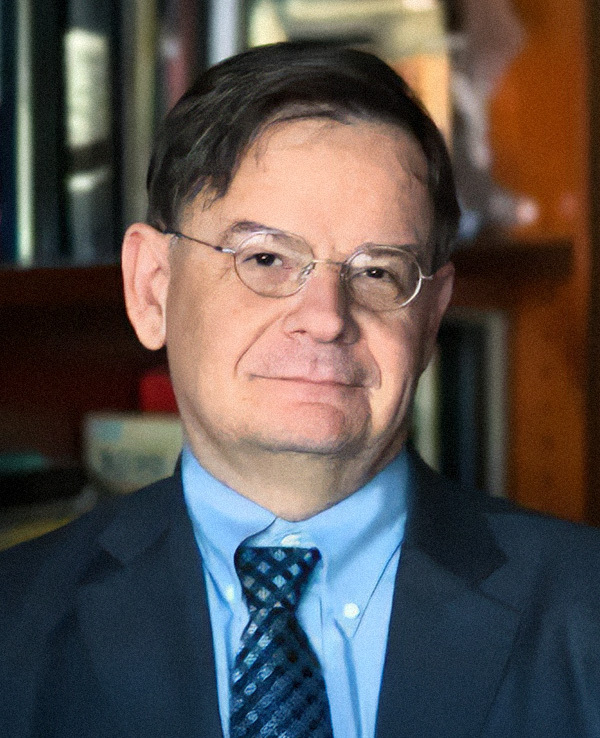
Andrei Lankov will give the lecture “East Asia after World War II: Revenge of the Rice Civilizations?” — 8 February 2027, 19:00, Iris Hotel Eden. Tickets from €45.
About the lecture
Back in the mid-20th century, East Asia seemed like a region of poor agrarian societies stuck in a traditional way of life. However, what happened over the next seventy years turned ideas about what was possible upside down. Today this region is one of the main centers of the global economy, technology, and culture, without which it is impossible to imagine the modern world. This tectonic shift is often called a “miracle.” But behind any miracle there are specific strategies, hard calculation, and unique cultural codes. How, in just a couple of generations, did yesterday’s peasants create advanced megacities? What role did ordinary rice farming play in shaping a unique work ethic, and why did Confucian values turn out to be the ideal fuel for a capitalist leap? East Asian modernization almost always went hand in hand with harsh authoritarianism, but it developed according to two completely different scenarios: “White” modernization (South Korea, Taiwan, Singapore) — the path of countries oriented toward the West. Officially they proclaimed themselves liberal democracies, but in practice for many years they were ruled with an iron fist. “Red” modernization (China, Vietnam) — the path of states that remained faithful to socialist flags and communist parties, but in fact built a highly efficient market capitalism. Every grand success has its price. What price did the societies of East Asian countries pay for this leap, what difficult challenges are they facing right now, and what awaits the region in the near future — we will talk about all this at our lecture.
After the lecture, there will be a Q&A session (ask the most interesting questions!).
Andrei Lankov is a Russian historian and Orientalist, a leading global expert on North Korea. Doctor of Historical Sciences, professor at Kookmin University in Seoul. Author of numerous books and articles on the politics, history, and culture of the Korean Peninsula. Frequently appears in international media as an expert on issues of the DPRK’s domestic and foreign policy.
Part of a tour · 5 more cities
This lecture takes place in 6 cities